
One of the biggest myths in business is that organizations struggle because people don’t know what’s wrong. Most of the time, they know exactly what’s wrong. The problem is they don’t believe it’s safe, or worth it, to say so.
Most organizations don’t have a strategy problem. They have a silence problem.
I’ve seen this among retailers, healthcare systems, industrial companies, and just about every organization I’ve worked with. The field and front line see the friction, the conflicting priorities, the broken processes, the initiatives that will never work as designed. The emperor has no clothes. Everybody sees it. Few people say it. Not because they’re disengaged, but because they’ve done the math. Speaking up carries risk. Staying quiet doesn’t. So they nod in meetings, repeat the talking points, and then have the most expensive conversation in the company after the meeting ends.
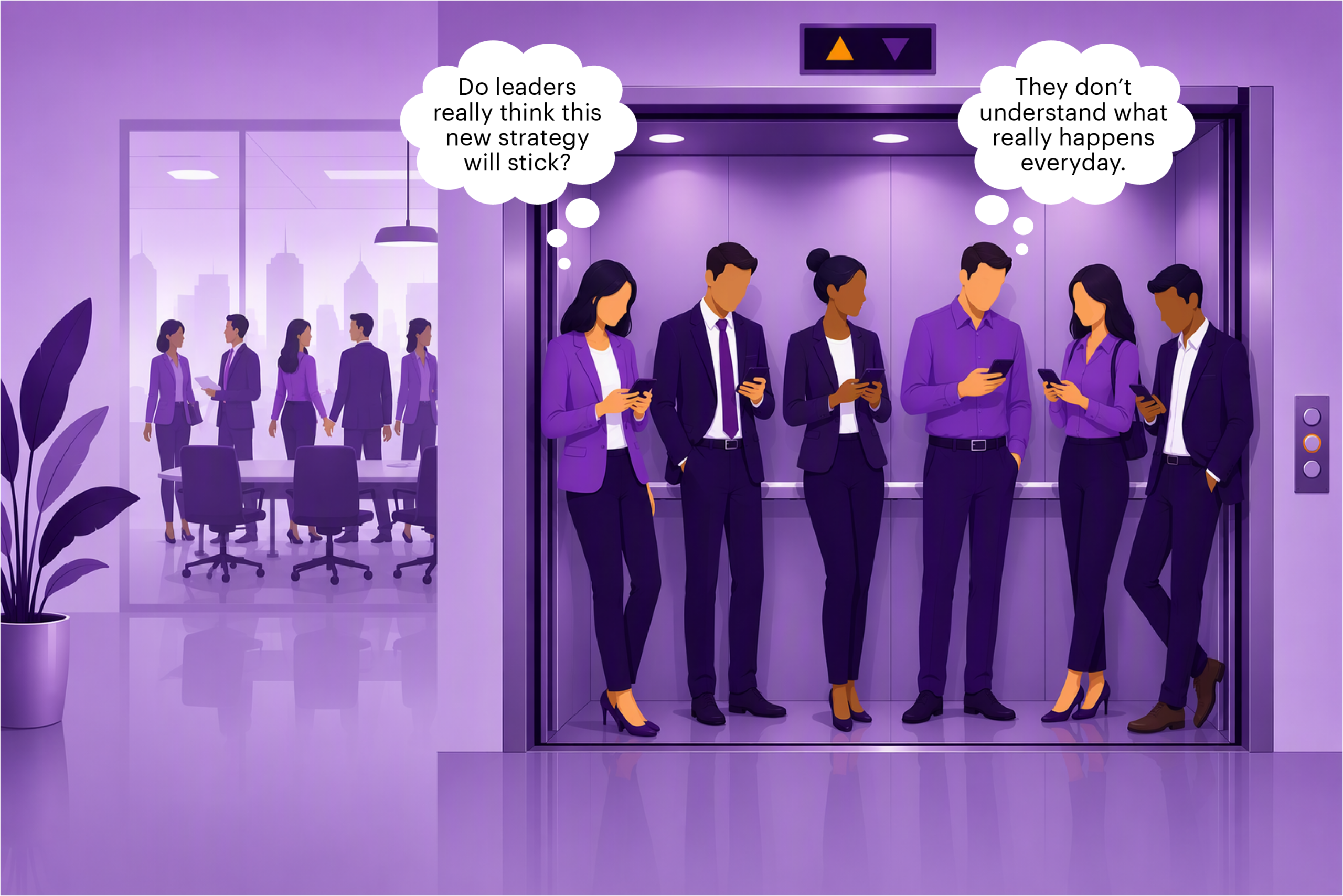
Nothing says alignment like eight people nodding in the room and then immediately texting each other in the elevator… or during the Zoom call!
The silence in the room may look like alignment, but often it’s just the setup for the meeting after the meeting.
The longer I work with organizations, the more I believe leaders face a quiet but compounding challenge: they forget what it’s like not to know. As they rise, they gain altitude, absorbing the strategy, the tradeoffs, the financial pressures, the closed-door conversations. Over time, many unintentionally begin communicating as if everyone shares that context. But they don’t. Leaders can become both too close and too far away at the same time. Too close to their own assumptions, but too far from the daily realities of the people doing the work that many leaders once did. That’s where trust begins to erode.
Fear doesn’t just suppress honesty. It suppresses performance, innovation, and ownership. Why challenge a flawed assumption if it could hurt your career? Why tell the truth if the cost feels greater than the benefit? The hidden cost isn’t hurt feelings. It’s lost performance.
The meeting after the meeting is where the truth finally shows up. The problem is, it shows up too late and to the wrong people.
The most dangerous question in any organization isn’t “what don’t we know?” It’s “What does everybody know that nobody feels safe enough to say?” Because that’s usually where the biggest opportunities, and risks, are hiding.
And if you’re a leader, the question worth sitting with is this: have you become so close to the strategy that you’ve lost touch with the experience of the people expected to deliver it? People don’t expect leaders to know everything. But they do expect leaders to understand what it’s like to be them.