

Summary: AI isn’t hype—it’s really transforming work, sometimes painfully so. Companies behave like the worst friends you’ve ever had when they talk about it to their people. There’s a better way, and I’ll show you how it works. Let’s go.
Work is changing
Every day, I witness massive upheaval in companies, affecting formerly untouchable jobs. People who work in once-stable fields (HR, finance, IT, marketing, etc.) find themselves displaced by automation, AI, and offshoring. Always believing they were valuable, they’re suddenly told they are a cost to the company that needs to be cut. In the face of this life-altering news, companies don’t even give them the courtesy of a Clooneyesque Up in the Air speech. They give talking points in town halls or (even worse) in lengthy emails. The result is deep despair and mistrust.
What if friends talked like corporate communications?
Here’s a thought exercise: What would happen if, in times of personal crisis, our friends behaved like corporate communications leaders?
I remember being a sleep-deprived dad with a newborn whose undiscovered food allergy had him up screaming most nights. The all-nighters rocking him were some of the hardest of my life. Now imagine me getting coffee with three friends the next morning. They all work in change management, and here’s what they’d say:
Friend 1: The Obfuscator
“David, these near-term emotional headwinds should not be interpreted as indicators of long-term value erosion. Rather, these periods represent critical capability-building inflection points that, when successfully navigated, accelerate the transition to a more resilient, higher-performing personal operating model.”
Result: Solid punch to the jaw
Friend 2: The Glitter Cannon
“Fatherhood is going to make your life better in every way! Just get out of your head about it, and you’ll eventually see that having a child was an awesome choice that brings you more joy than you could possibly imagine now!”
Result: Eye roll (and search for more honest friends)
Friend 3: The Greater Good Puritan
“David, being a dad means sacrifice and hard work, but you must muscle through for the good of the family. Don’t expect joy. Parenting is its own reward.”
Result: Quiet despair and guilt
You may laugh at the absurdity, but I’d wager you’ve experienced at least one of these communications approaches in your corporate job.
Another path: A picture is worth a thousand slides
Do you know what would’ve been the most helpful thing in that rocking chair moment twelve years ago?
If I could’ve known that the long, sleepless nights with a newborn would someday turn into my 12-year-old laughing beside me on a ski lift while snowboarders flipped over the jumps below, it would’ve steeled me for the tough moments. I would’ve caught the vision more easily.
This is where organizational leaders have an edge: Where I couldn’t capture a picture of the future, organizations can literally draw one. I’m not talking about a flow chart—nobody cares about your flow chart. As HBR confirmed in a February study, infographics and diagrams don’t change behavior. Only visual metaphors (boats, rocket ships, mountains, etc.) create the necessary emotional connection to lead change successfully.
How metaphors transform behavior
Last year we worked with a client leading a massive, difficult transformation that involved shifting jobs to different locations, automating processes, adopting new technologies, and requiring new ways of working. To help their employees, our concept artist drew a visual metaphor for the transformation, paired with thoughtful questions and activities to help them interpret the vision and wrestle with the path they were about to go on.
We didn’t mince words or promise a perfect journey. Rather, the experience we created painted an honest picture of how the marketplace was changing (winds of change), how their current systems were threatening to undermine competitiveness (old leaky boats), and how the new transformation would secure the future for them and their customers (the streamlined new sailboat):
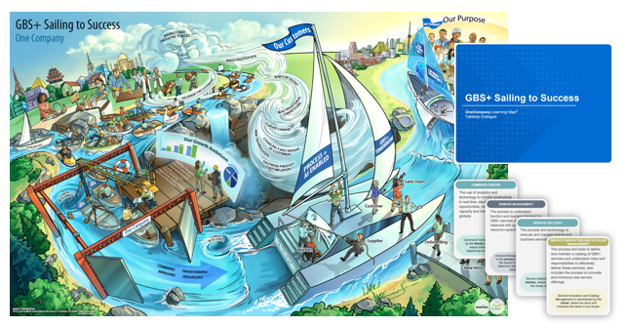
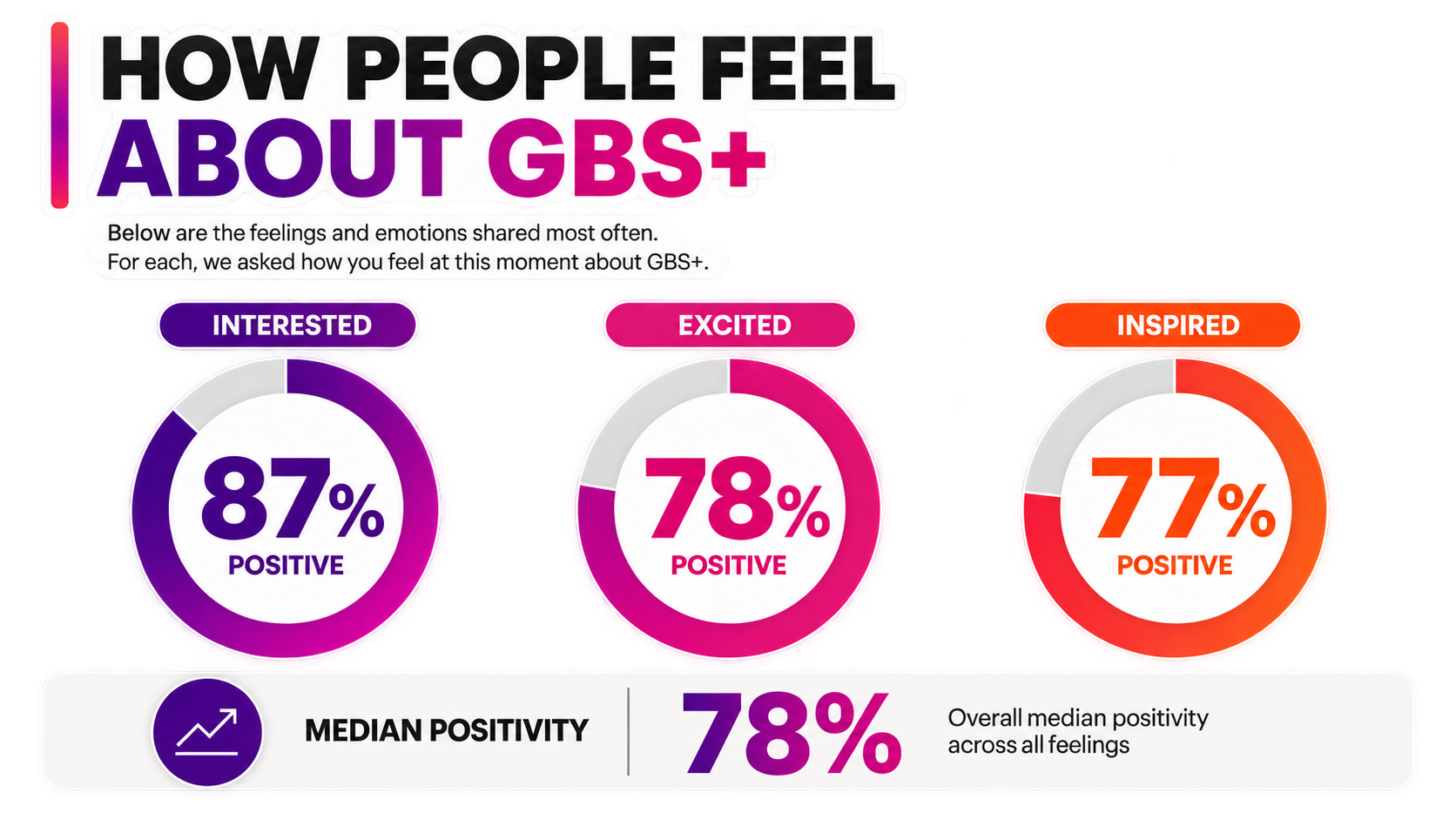
The result was that, despite the magnitude of the transformation, people who went through the 60-minute experience expressed overwhelmingly positive sentiments from the very beginning of the change management journey—before they ever started tactical training. We continued to use this methodology as key processes were rolled out, keeping the momentum of the initial experience so the vision was top of mind.
This methodology had a profoundly positive impact on morale, with 78% saying they were excited… about a GBS transformation!
What’s the takeaway?
Companies can’t keep talking at employees like a tone-deaf friend. If your change consultants show up armed with charts, graphs, and talking points alone, it’s time to rethink your partnerships.
Instead, find a way to paint a picture of the future and help people understand it through dialogue, changing their understanding of the landscape and their role in it, and boosting engagement through tough moments. That’s what you should expect from your C-suite, empowered by your organizational change leaders.
In the middle of gut-wrenching change, everyone should be lucky enough to have a friend honest enough to say:
“Tonight is really hard, and I’m sorry. It’s probably going to be hard for a while. Let’s talk about how we’re going to get through tonight together, and then let’s paint a picture of tomorrow: Someday you’re going to teach that little boy how to ski in the warm Colorado sunshine full of laughter and…”